General
2026-11-24
APNN delivers crisis communication training for Mind HK
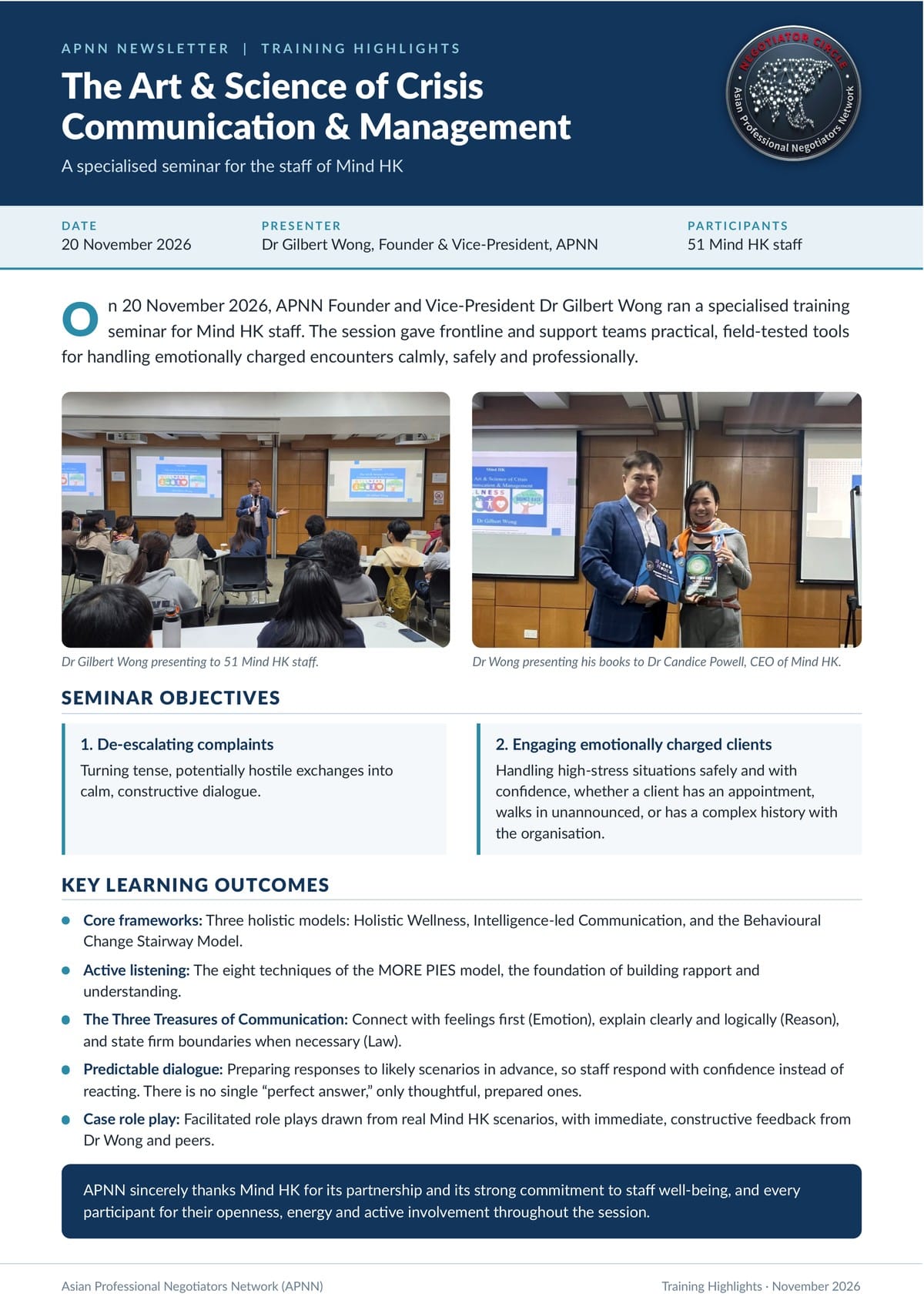
On 20 November 2026, Dr Gilbert Wong led a specialised seminar for 51 Mind HK staff, sharing practical tools for de-escalation, active listening and confident crisis communication.
On 20 November 2026, APNN Founder and Vice-President Dr Gilbert Wong delivered The Art & Science of Crisis Communication & Management, a specialised training seminar for 51 members of staff at Mind HK.
The session gave frontline and support teams practical, field-tested tools for handling emotionally charged encounters calmly, safely and professionally.
Seminar objectives
The training focused on two areas: turning tense or potentially hostile complaints into calm, constructive dialogue; and engaging emotionally charged clients safely and confidently. The latter included situations involving scheduled appointments, unannounced visits and clients with complex histories with the organisation.
Key learning outcomes
• Core frameworks: Holistic Wellness, Intelligence-led Communication and the Behavioural Change Stairway Model.
• Active listening: the eight techniques of the MORE PIES model as a foundation for rapport and understanding.
• The Three Treasures of Communication: connecting with feelings first (Emotion), explaining clearly and logically (Reason), and stating firm boundaries when necessary (Law).
• Prepared dialogue: anticipating likely scenarios so staff can respond with confidence. The emphasis was on thoughtful preparation rather than finding a single perfect answer.
• Case role play: practising real Mind HK scenarios with immediate, constructive feedback from Dr Wong and fellow participants.
During the event, Dr Wong also presented his books to Dr Candice Powell, CEO of Mind HK.
APNN sincerely thanks Mind HK for its partnership and commitment to staff wellbeing, and every participant for their openness, energy and active involvement throughout the session.
The original APNN training newsletter is included in the gallery below. Select the image to enlarge it.